
Every year, thousands of people quietly build five-figure monthly incomes by recommending products they genuinely use — no inventory, no customer service calls, no startup capital required. Affiliate marketing remains one of the most accessible online business models, yet most beginners stall before they ever earn their first commission. The good news? Anyone can start affiliate marketing with zero prior experience, as long as they’re willing to learn a handful of core skills and commit to showing up consistently. This deep dive breaks down exactly how to do it — step by step, with no fluff.
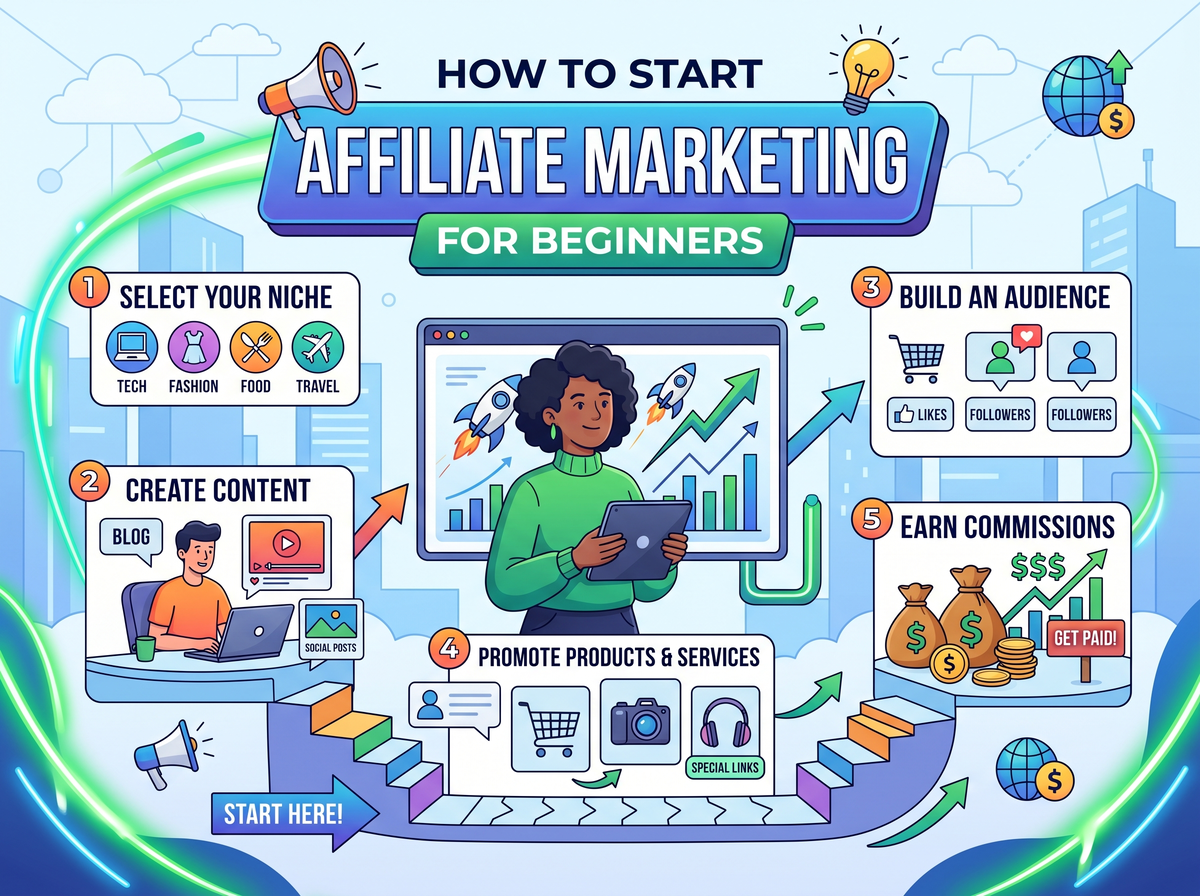
What Affiliate Marketing Actually Is (And Why It Works for Beginners)
At its core, affiliate marketing is a revenue-sharing arrangement. A company pays a commission to someone — the affiliate — for driving a sale, lead, or click through a unique tracking link. The affiliate doesn’t create products, handle shipping, or manage refunds. Their only job is to connect the right audience with the right offer.
This model works especially well for beginners because the barrier to entry is almost nonexistent. There’s no need to develop a product, build a warehouse, or hire a team. One person with a laptop and an internet connection can sign up for an affiliate program, grab a link, and start promoting within the same afternoon.
The economics are straightforward, too. Commission rates vary widely — Amazon’s Associates program pays between 1% and 10% depending on category, while software and digital product programs often pay 20% to 50% recurring. Someone promoting a $100/month SaaS tool at a 30% recurring commission earns $30 every single month that customer stays subscribed. Stack a few dozen of those referrals, and the math gets interesting fast.
Choosing a Niche That Doesn’t Bore You to Tears
The single biggest mistake new affiliates make is picking a niche based solely on commission potential. They see high payouts in finance or insurance, dive in, and burn out within eight weeks because they have zero genuine interest in comparing term life policies.
A better approach is to find the overlap between personal curiosity and market demand. Someone who’s spent three years experimenting with home espresso machines already has opinions, vocabulary, and credibility that no keyword-stuffing newcomer can fake. That lived experience translates directly into content that resonates with readers — and content that resonates is content that converts.
To validate a niche, one can use free tools like Google Trends and Ubersuggest to check search volume. If people are actively searching for “best [product] for [use case]” within a given category, there’s affiliate potential. The sweet spot is a niche that’s specific enough to build authority quickly but broad enough to sustain hundreds of content ideas over time. “Outdoor gear” is too broad. “Ultralight backpacking gear for thru-hikers” is just right.
Building a Platform Without Spending a Fortune
A common misconception is that one needs a polished, professionally designed website before they can start affiliate marketing. In reality, a simple WordPress blog on affordable hosting — services like Hostinger or SiteGround run under $5/month — is more than enough to get rolling.
The key is choosing a platform that allows full ownership and control. Social media channels like YouTube, TikTok, or Instagram can absolutely drive affiliate revenue, but algorithms shift constantly. A blog or website acts as a home base — a piece of digital real estate the affiliate actually owns. Social platforms then become traffic channels that funnel visitors back to that home base.
Consider the story of a former teacher who started a niche blog reviewing budget-friendly art supplies in 2021. She published two articles per week for six months, focusing on long-tail search queries like “best watercolor set under $30 for beginners.” By month eight, her site was pulling in 15,000 organic visitors per month and earning roughly $1,200 in affiliate commissions — all from a $48/year hosting plan and free WordPress theme. No paid ads. No email list yet. Just consistent, helpful content targeting real questions people were typing into Google.
Joining the Right Affiliate Programs
Once a platform exists, the next step is finding programs that align with the chosen niche. Three main categories of affiliate programs exist, and each serves a different purpose.
Affiliate networks like ShareASale, CJ Affiliate, and Impact aggregate thousands of brands into a single dashboard. They’re ideal for beginners because one application can unlock dozens of merchants. Direct brand programs — think Amazon Associates, Bluehost, or ConvertKit — are run by individual companies and sometimes offer higher commissions or exclusive perks. Digital product marketplaces like ClickBank or Gumroad specialize in courses, ebooks, and software, often with commissions above 40%.
When evaluating a program, experienced affiliates look beyond the commission rate. They check cookie duration (how long after a click the affiliate still gets credit for a sale), payment terms, and whether the brand actually converts. A 50% commission means nothing if the product’s sales page is poorly designed and nobody buys. Reading reviews from other affiliates and testing the product personally — when possible — eliminates a lot of guesswork.
Creating Content That Earns Clicks and Trust
Affiliate income lives and dies on content quality. The highest-earning affiliates aren’t the ones pumping out the most articles — they’re the ones creating the most genuinely useful resources.
Three content formats consistently perform well for affiliate marketers. Product reviews work because they capture high-intent search traffic — someone Googling “Ahrefs review 2024” is already considering a purchase. Comparison posts (“Ahrefs vs. SEMrush”) serve readers stuck between two options and tend to convert at higher rates than general reviews. How-to tutorials that naturally incorporate product recommendations build trust first and sell second, which creates loyal audiences over time.
Each piece of content should answer a specific question better than anything else currently ranking on page one. That means going deeper — including original screenshots, personal testing results, pros-and-cons breakdowns, and honest assessments of who the product is not for. Transparency isn’t just ethical; it’s a conversion strategy. Readers who trust an affiliate’s honesty are far more likely to click through and buy.
Driving Traffic Without a Marketing Budget
Content without traffic is just a diary. For beginners who can’t invest in paid advertising, organic traffic strategies are the most sustainable path forward.
Search engine optimization (SEO) is the primary engine for most affiliate sites. This means targeting keywords with clear purchase intent, writing thorough content that satisfies search queries, building internal links between related articles, and earning backlinks over time through outreach or guest posting. SEO is slow — most new sites take four to eight months to see meaningful organic traffic — but it compounds. An article written today can drive commissions for years.
Pinterest is an underrated traffic source, particularly for niches like home décor, recipes, fitness, and personal finance. It functions more like a search engine than a social network, and pins can drive clicks for months after posting. YouTube also rewards evergreen content and has the added advantage of building personal connection through video, which accelerates trust.
The principle that ties all traffic strategies together is consistency. Publishing one deeply useful article per week beats publishing ten mediocre ones. Algorithms — whether Google’s or YouTube’s — reward sustained output and topical depth.
Avoiding the Traps That Kill Most Beginner Affiliates
Most people who try affiliate marketing quit within six months. Understanding why helps avoid the same fate.
Trap one: chasing commissions instead of serving readers. The moment content starts feeling like a sales pitch, readers bounce. The best affiliates frame themselves as helpful advisors, not salespeople. Trap two: spreading too thin across too many niches. Authority comes from depth. Picking one focused topic and owning it outperforms dabbling in five different categories every time.
Trap three: ignoring disclosure requirements. The FTC requires affiliates to clearly disclose their financial relationships with the brands they promote. This isn’t optional — it’s federal law in the United States, and similar regulations exist in the UK, EU, and Australia. A simple statement at the top of each post (“This article contains affiliate links. I may earn a commission at no extra cost to you.”) covers the basics. Trap four: expecting overnight results. Affiliate marketing is a long game. The first three to six months often produce little to no income. The affiliates who succeed are the ones who keep publishing through that silence.
The Path Forward
Anyone willing to pick a niche, build a simple platform, join relevant programs, and create genuinely useful content can start affiliate marketing — regardless of their background or experience level. The model rewards curiosity, consistency, and a real desire to help people make better purchasing decisions.
The clearest next step is the simplest one: choose a niche today, set up a basic website this week, and publish the first piece of content before the weekend. Perfection isn’t the goal — momentum is. Every successful affiliate marketer started with a single article and zero readers. The difference between those who built real income and those who didn’t comes down to one thing: they kept going.